[For Non-Korean LPs] The Inverted Risk Curve
Walk into a Sand Hill Road partner meeting and the question is: who left Stripe last quarter, and how do we get into their seed round before anyone else hears the name. Walk into a Yeouido investment committee and the question is: how many times is…
Also available on 애당초 4개의 시선 (Ethan Cho: Four Lenses on Everything) on Substack.
Read on Substack →[](https://substackcdn.com/image/fetch/f_auto,q_auto:good,fl_progressive:steep/https%3A%2F%2Fsubstack-post-media.s3.amazonaws.com%2Fpublic%2Fimages%2F21c1bcab-f0b3-47cc-95b6-331ebcea1559_330x153.jpeg)
Walk into a Sand Hill Road partner meeting and the question is: who left Stripe last quarter, and how do we get into their seed round before anyone else hears the name. Walk into a Yeouido investment committee and the question is: how many times is this Pre-IPO secured against downside, and what is the redemption clause if the listing slips past 2027.
[](https://substackcdn.com/image/fetch/f_auto,q_auto:good,fl_progressive:steep/https%3A%2F%2Fsubstack-post-media.s3.amazonaws.com%2Fpublic%2Fimages%2F50a36806-b755-42ae-9d55-20820cb6fcd9_275x183.jpeg)
These are not two cultures investing in the same asset class with different styles. They are two financial systems that have placed their bets at opposite ends of the risk curve. American venture capital concentrates its conviction at the earliest, most uncertain moment. Korean institutional capital concentrates its conviction at the latest, most certain moment. The inversion is structural, and once you see the cause, the behavior of every deal in both markets becomes predictable.
The cause is the LP, not the GP.
[](https://substackcdn.com/image/fetch/f_auto,q_auto:good,fl_progressive:steep/https%3A%2F%2Fsubstack-post-media.s3.amazonaws.com%2Fpublic%2Fimages%2F1d2e7a79-3c6f-4e22-ba2f-ca000456cf67_1200x1500.webp)
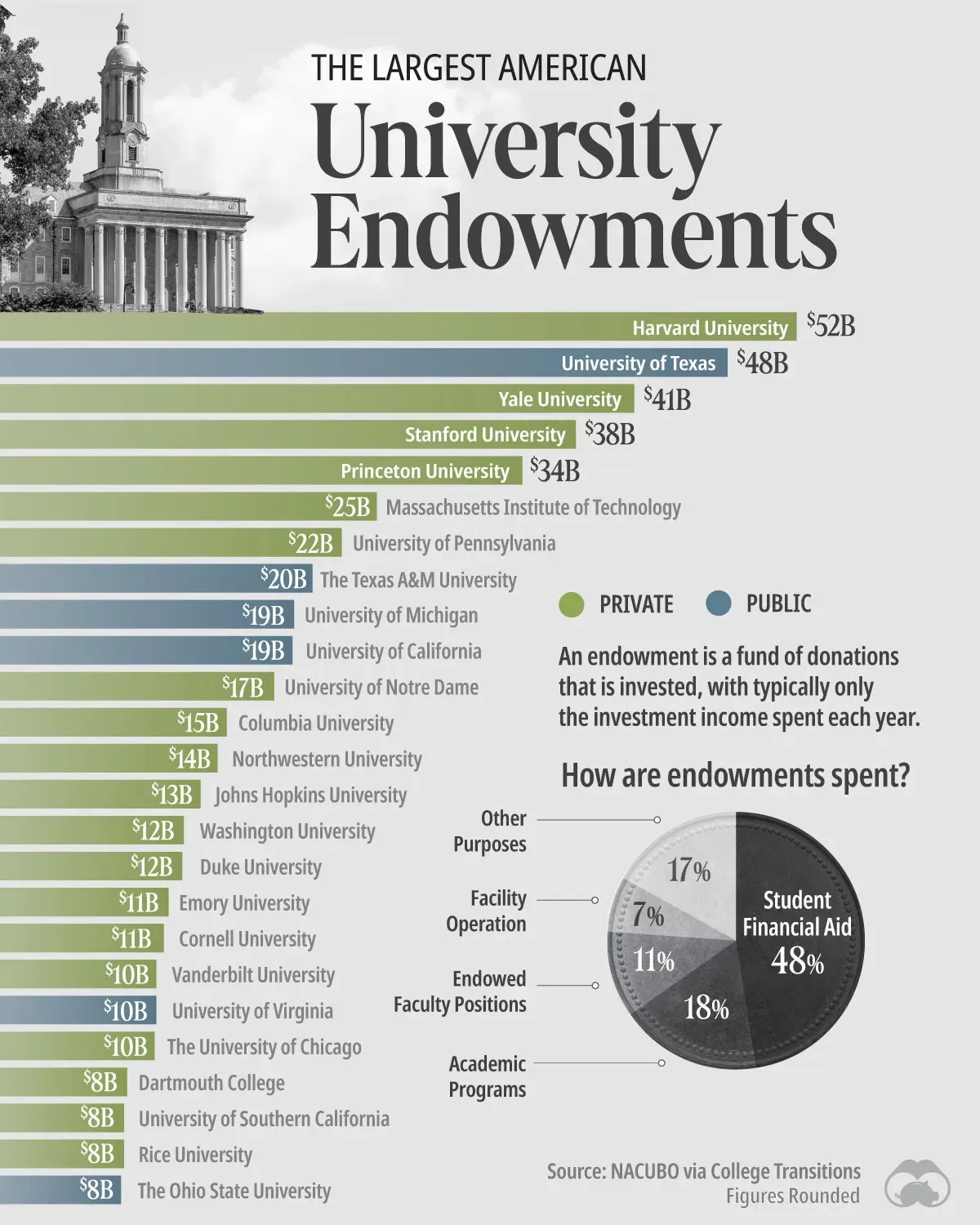
In the United States, the dominant venture LP is the university endowment, the family office, and the pension fund willing to lock capital for ten to fifteen years against the explicit expectation that most funds will return modestly and a few will return everything. The power law is not a belief in Silicon Valley. It is a budgeted assumption. Yale does not call Sequoia after a down year and ask for a redemption schedule.
In Korea, the dominant LP is 모태펀드 (the Korea Fund of Funds) and its policy-fund cousins, evaluated by the National Assembly and the Board of Audit. Their fiduciary frame is not “did you generate alpha across the portfolio.” It is “did this specific fund return its principal with a multiple, and if not, who is responsible.” A Korean GP whose fund liquidates below 1.0x does not get to raise the next one. Often the firm itself does not survive. Variance is not rewarded here. Variance is treated as negligence.
That single fact reorganizes everything downstream.
If your LP measures you on every fund’s liquidation multiple, you cannot run a portfolio where eight of ten investments go to zero. You need eight of ten to return two times. The only way to engineer that distribution at scale is to invest after product-market fit is proven, after revenue is contracted, after the IPO underwriter is selected, and to wrap each check in redeemable convertible preferred shares with put options, ratchet clauses, and IPO-failure penalties. That is not risk capital. That is structured private credit dressed in venture clothing.
If your LP is Yale, you can do the opposite. You can pay forty million dollars for eight percent of a six-person company because you know that one such position every five years pays for the entire fund. You will lose money on most of these checks. Yale knows. Yale signed up for it in writing.
I call this the Risk Capital Inversion, and it is the single most important thing a non-Korean LP needs to understand before allocating to a Korean fund. *The Korean venture market is not undercapitalized. It is miscapitalized.* The capital that exists is structurally prohibited from doing what venture capital is supposed to do, which is buy uncertainty cheaply and hold it long enough for the math to work.
*This is also the opportunity. A Korean fund backed by LPs who do not require quarterly downside-protected reporting, who accept the power law in writing, who measure returns at the portfolio level rather than the fund level, can do in Korea what American funds did in Silicon Valley a generation ago.*
Not because the founders are absent. The founders are there. I have spent twenty years watching them. The capital structure to back them properly is what has been missing.
That is the gap TheVentures was built into, and it is the gap our AI Fund is being raised to fill.
---
*Ethan Cho (조여준) is Chief Investment Officer at TheVentures, a Seoul-based early-stage venture capital firm founded by the co-founders of Viki (acquired by Rakuten). His twenty-year career includes Google Korea, Qualcomm Ventures, Samsung Strategy & Innovation Center, KB Investment, and Fast Ventures, with early investments in Toss and Dunamu. He holds an MBA from Columbia Business School and is ranked the #1 Korean voice on LinkedIn by Favikon.*